Understanding public procurement rules across the Arab World, GCC and Middle East is essential for contractors, suppliers and consultants seeking business opportunities in this dynamic region of 26 countries, over 500 million people and a combined GDP exceeding $4.5 trillion. From the Gulf to North Africa, from the Levant to the broader Middle East, each nation maintains unique procurement frameworks while sharing common principles rooted in transparency, competition and fair treatment of bidders.
This comprehensive guide covers the tender rules, registration requirements, local content mandates and key regulatory bodies for all 26 countries across three interconnected regions: the Arab World (22 countries), the Gulf Cooperation Council (GCC) and the broader Middle East. Whether you search for مناقصات السعودية (Saudi tenders), مناقصات الإمارات (UAE tenders), appels d'offres in North Africa or tenders in Turkey, Iran, Israel and Cyprus, understanding local regulations is your first step toward success.
Understanding the Three Regions: Arab World, GCC & Middle East
This guide covers 26 countries across three interconnected regions:
- Arab World (22 countries): Algeria, Bahrain, Comoros, Djibouti, Egypt, Iraq, Jordan, Kuwait, Lebanon, Libya, Mauritania, Morocco, Oman, Palestine, Qatar, Saudi Arabia, Somalia, Sudan, Syria, Tunisia, United Arab Emirates (UAE), Yemen
- GCC (6 countries - subset of Arab World): Saudi Arabia, UAE, Qatar, Kuwait, Oman, Bahrain
- Middle East (additional countries beyond Arab World): Cyprus, Iran, Israel, Turkey
Total unique countries covered: 26 (Arab World 22 + Cyprus, Iran, Israel, Turkey)
The procurement systems share common characteristics while maintaining distinct national frameworks:
- GCC Countries: Highly sophisticated digital procurement platforms with mandatory e-submission
- North Africa: Blend of French-inspired "marchés publics" and modern e-procurement initiatives
- Levant Region: Reconstruction-driven procurement with international donor funding
- Middle East (Turkey, Iran, Israel, Cyprus): Diverse frameworks ranging from EU-harmonized systems to WTO GPA members
- Other Arab Nations: Emerging frameworks often supported by World Bank and UN organizations
Key Arabic Tender Terminology You Must Know (for Arab World countries):
- إعلان مناقصة (I'lan Munaqasa): Tender Notice or Announcement
- دعوة للمناقصة (Da'wat Munaqasa): Invitation to Tender/Bid
- مستندات المناقصة (Mustanadat al-Munaqasa): Tender Documents
- لجنة المناقصات (Lajnat al-Munaqasat): Tender Committee
- تأمين العطاء (Tameen al-Ataa): Bid Bond or Tender Guarantee
- عرض (Ardh): Proposal or Offer
- إرساء المناقصة (Irsa' al-Munaqasa): Contract Award
Part 1: Gulf Cooperation Council (GCC) Countries
The six GCC nations share the most sophisticated procurement frameworks in the Arab World, characterized by mandatory digital platforms, strong local content requirements and GCC-wide preferences for member companies.
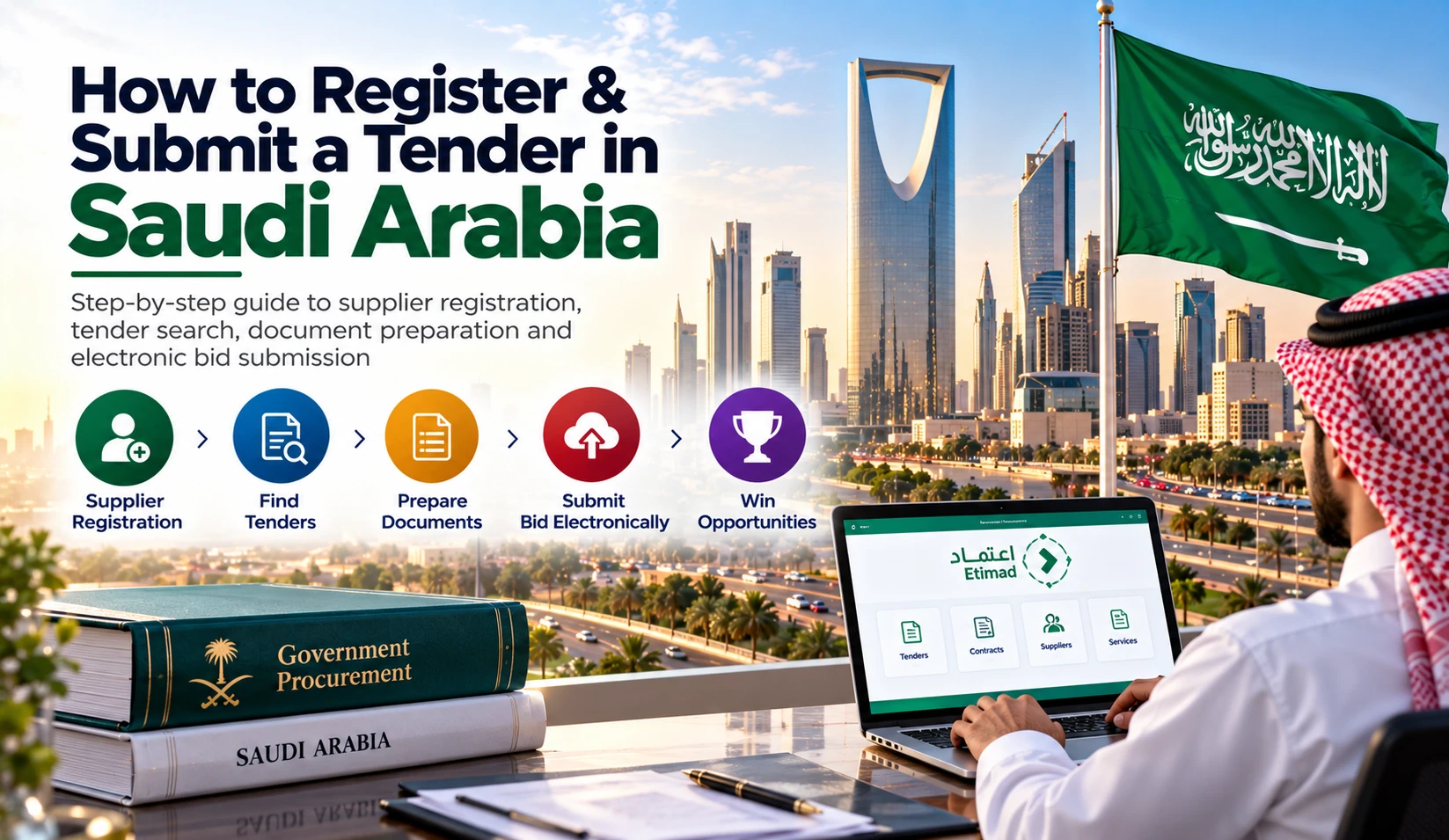
1. Saudi Arabia (المملكة العربية السعودية)
Governing Law: Government Tenders and Procurement Law (GTPL)
Key Platform: Etimad (etimad.sa) - Mandatory e-procurement portal
Primary Regulator: Local Content & Government Procurement Authority (LCGPA)
Key Rules & Requirements:
- Mandatory Etimad Registration: All bidders must register on the Etimad platform to view tenders and submit bids. The platform is overseen by the Ministry of Finance and is mandatory for all government entities.
- Regional Headquarters (RHQ) Requirement: Since early 2024, government entities are restricted from contracting with foreign companies without regional headquarters in Saudi Arabia. However, an exemption mechanism exists for specialized projects requiring unique expertise and for contracts valued up to SAR 1 million (approx. $266,000 USD). Exemptions are processed through the Etimad platform.
- Local Content Requirements: The LCGPA enforces mandatory local content targets varying by sector (30% to over 70%). Bids failing to meet minimum requirements may be disqualified.
- Bid Bond: Typically 1% to 5% of bid value, issued by a bank licensed in Saudi Arabia.
- Language: All official submissions require certified Arabic translations. While private contracts can be in any language, Arabic prevails in Saudi courts for any dispute.
- Arbitration: Arbitration agreements with government bodies usually require Minister of Finance approval.
- Over 700 multinational companies have relocated regional headquarters to Riyadh, exceeding the 2030 target of 500.
Governing Law (Federal): Federal Law No. 11 of 2023 on Procurement in the Federal Government, with Implementing Regulation under Cabinet Decision No. 122 of 2024
Key Platform: Digital Procurement Platform (Ministry of Finance)
Primary Regulator: Ministry of Finance - Central Procurement Unit
Excluded Entities: Ministry of Defence, security entities, construction projects, military purchases, pharmaceutical procurements and PPPs are excluded from federal law.
Key Rules & Requirements:
- Dual Federal-Emirate System: Federal entities follow Law No. 11 of 2023, while each emirate maintains separate regulations.
- Abu Dhabi: Decision No. 36 of 2021 on Abu Dhabi Procurement Standards
- Dubai: Law No. 12 of 2020 on Contracts and Warehouse Management
- Sharjah: Law No. 8 of 2017 on Procurements, Tenders, Auctions and Warehouses
- Ajman: Law No. 3 of 2025 (issued September 2025) regulating procurement, contracts and inventory management
- Mandatory Electronic Submission: All federal tenders require electronic submission with system-level error checking. Bidders are responsible for submission completeness under Article 24.
- Direct Order & Exclusive Source (Article 20): Federal Agencies may use direct order with justifications or exclusive source for sole supplier situations (patents, copyrights, technical reasons). Prohibited without justification or when tender is feasible.
- Tawazun Council: Responsible for defense and security procurement for Ministry of Defence. IDEX/NAVDEX 2025 saw 28 deals worth AED 19.95 billion.
- Dubai Outsourcing Law (Law No. 5 of 2026): Regulates outsourcing of government services, requiring contractors to employ at least one UAE national per non-national employee.
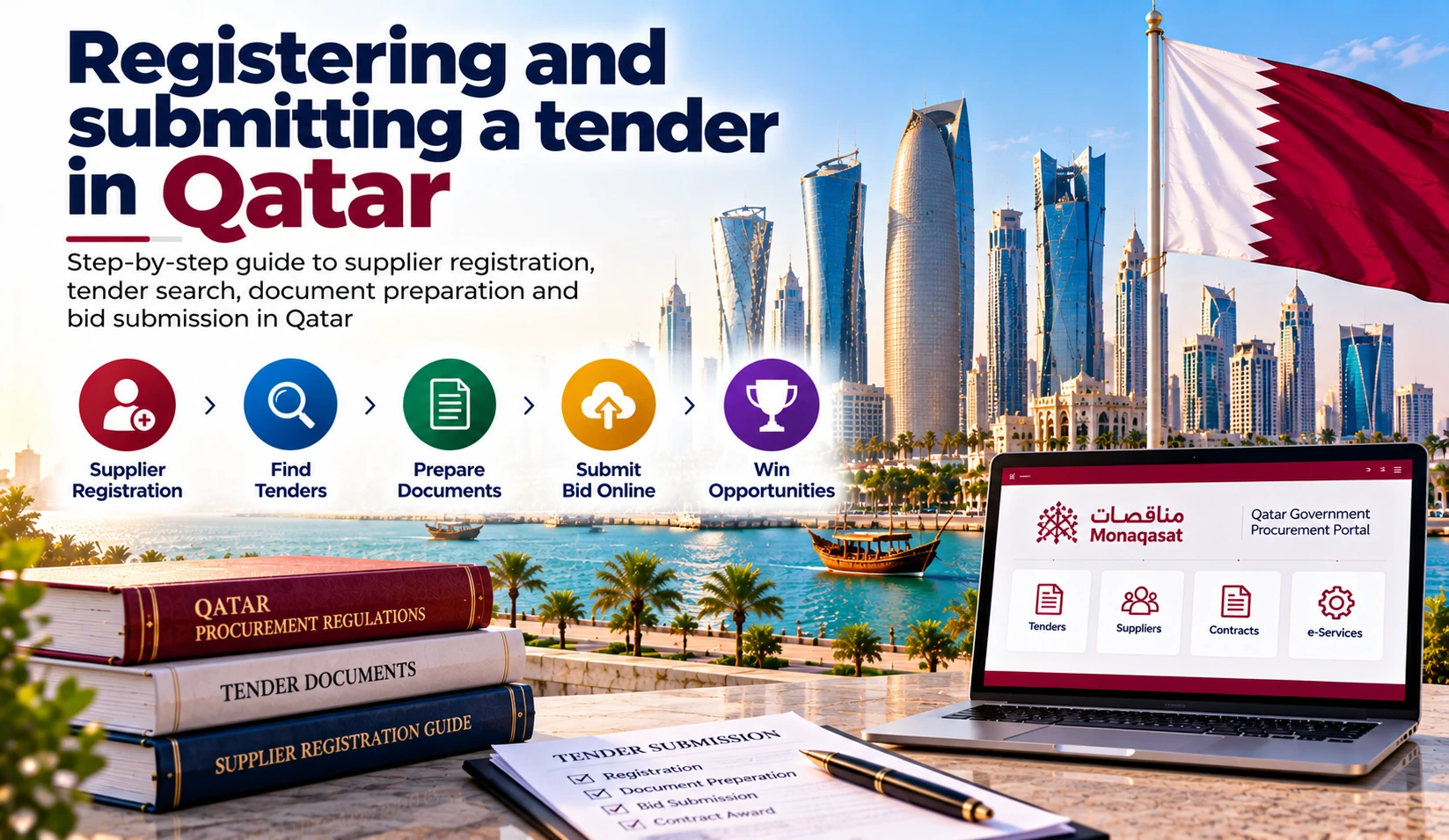
3. Qatar (دولة قطر)
Governing Law: Law No. 24 of 2015 on Tenders and Auctions
Key Platforms: Monaqasat (Ministry of Finance), Hukoomi portal
Primary Regulator: Tenders and Auctions Committee
Key Rules & Requirements:
- Two-Envelope System: Most public tenders use separate technical and financial proposal submission.
- Direct Purchase Order Threshold: Government bodies may use direct contracting for works valued up to QR 100,000 in specific cases (testing, unique items, urgent cases, low-value contracts).
- Tender Practice: Requires minimum 3 registered suppliers with required items locally.
- Ashghal (Public Works Authority): Major infrastructure tenders including roads, buildings, drainage projects. Announced 20 projects worth approximately QR 11.5 billion.
- Kahramaa (Water & Electricity): Power transmission and substation tenders.
- Priority for Qatari Companies: Selection criteria give priority to national companies when technical and financial factors are comparable.
- iSupplier Portal: Launched February 2026 for procurements under QR 200,000, replacing paper-based submissions.
4. Kuwait (دولة الكويت)
Governing Law: Law No. 49 of 2016 on Public Tenders
Key Platform: Central Agency for Public Tenders (CAPT)
Primary Regulator: Central Agency for Public Tenders (CAPT)
Key Rules & Requirements:
- Contractor Classification System: CAPT issues classification certificates valid for up to 3 years.
- Four Contractor Categories by Contract Value:
- Category 1: Major projects contractors (no specified minimum limit)
- Category 2: Tenders between KD 5 million and KD 100 million ($16.5M - $330M)
- Category 3: Tenders between KD 1 million and KD 10 million ($3.3M - $33M)
- Category 4: Local contractors and SMEs for tenders up to KD 2 million ($6.6M)
- Specialties: Construction, building works, mechanical works, electrical works.
- Consultancy Services Classification: Separate rules for consulting firms.
- SME Support: SMEs are placed in Category 4 automatically.
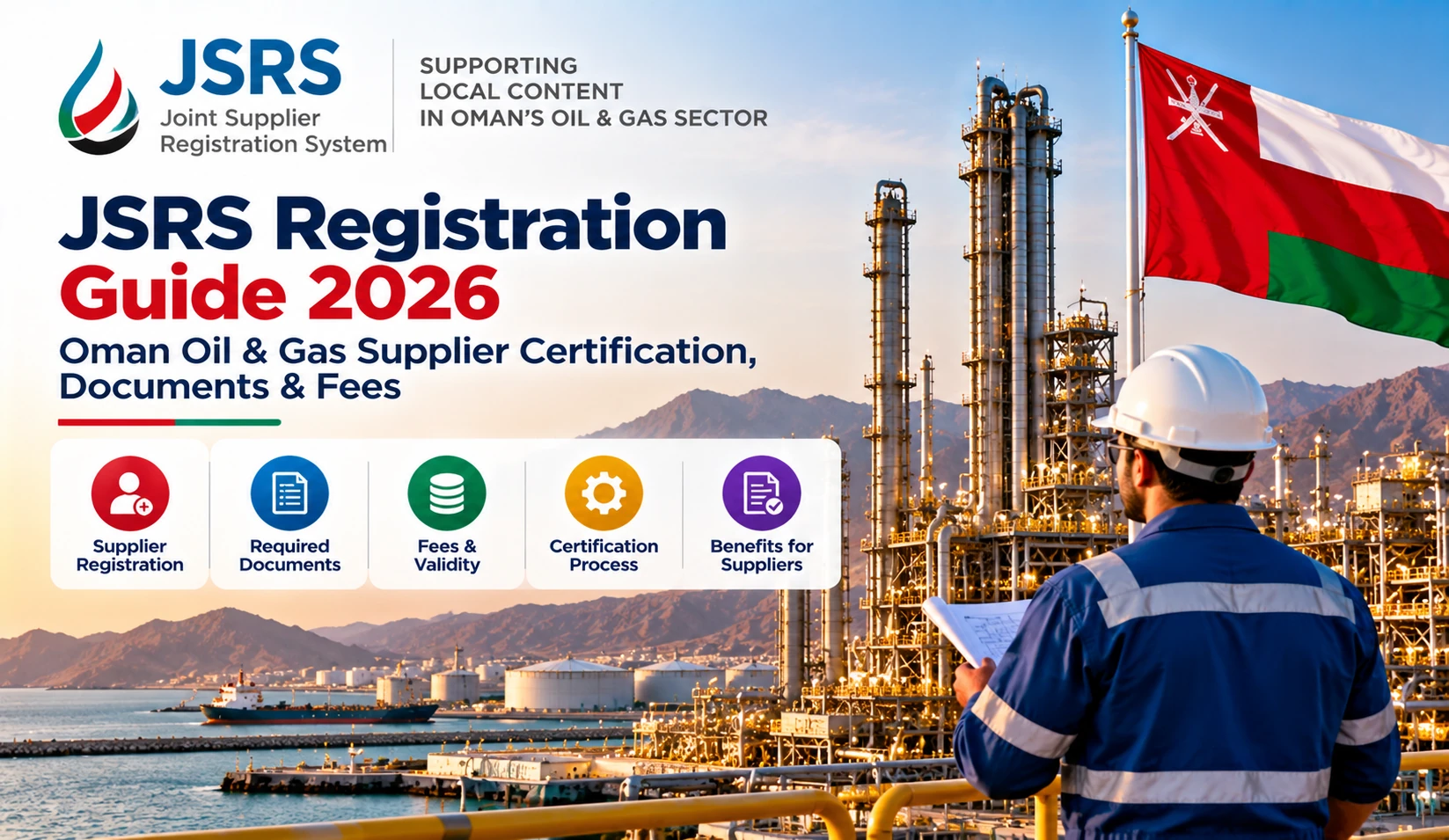
5. Oman (سلطنة عمان)
Governing Laws: Royal Decree 59/2024 (System for Signing Contracts and Financial Commitments of the State), Tender Law
Key Platform: Esnad (etendering.tenderboard.om)
Primary Regulator: Tender Board, Projects Tenders and Local Content Authority (PTLC)
Key Rules & Requirements:
- Royal Decree 59/2024 (Effective 25 December 2024): Replaced Royal Decree 48/1976, providing modern framework for state financial contracting.
- Contract Value Approval Tiers:
- OMR 3,000,000+: Signed by head of relevant government body
- OMR 1,000,000 - OMR 3,000,000: Signed by undersecretary or director-general
- Below OMR 1,000,000: Signed by director-general
- Mandatory Legal Review: Contracts above OMR 5,000,000 or involving borrowing must be reviewed by Ministry of Justice and Legal Affairs.
- Budget Requirement: Contracts without state budget allocation are null and invalid.
- Exempt Entities: Military, security agencies, Central Bank of Oman and Oman Investment Authority investments.
- Mandatory Tender Preparation Plans: Effective March 15, 2026 - all tenders require approved plan before publication on Esnad.
- Local Content Mandatory List: 57 product categories and 96 service categories requiring priority for Omani suppliers.
- Furas Platform (OIA): Provides advance tender visibility 3-6 months before release.
6. Bahrain (مملكة البحرين)
Governing Law: Tender Law No. 36 of 2005 (as amended)
Key Platform: Tender Board Bahrain (tenderboard.gov.bh)
Primary Regulator: Tender Board
Key Rules & Requirements:
- Centralized Tendering: The Tender Board is the central purchasing body for government entities.
- Public Tender: Open to all qualified suppliers meeting criteria.
- Limited Tender: Restricted to pre-selected suppliers for specialized procurements.
- Direct Purchase: Allowed for contracts below specified threshold with justifications.
- Bid Bond: Required for tenders above threshold (typically 1-5%).
- Local Content: Preference for Bahraini products and services where available.
Part 2: North Africa Countries (Arab World)
North African nations blend French-inspired public procurement systems with modern e-procurement initiatives. Key terms include "marchés publics" in Francophone countries and "مناقصات حكومية" in Egypt.
7. Egypt (جمهورية مصر العربية)
Governing Law: Law No. 182 of 2018 on Regulating Public Contracts
Key Platform: Government Tenders Portal (etenders.eg)
Primary Regulator: Unified Public Procurement Authority
Key Rules & Requirements:
- Electronic Tenders: Most government tenders are published on the unified e-tenders portal.
- Tender Methods: Public tender, limited tender, direct contracting and request for proposals.
- Bid Bond: Temporary insurance (1-2% of tender value) for serious bidders.
- Final Bond: Performance bond of 5% of contract value upon award.
- Local Content Preference: Preference for locally manufactured products under Egyptian product laws.
- Dispute Resolution: Administrative courts or arbitration as specified in contract.
8. Morocco (المملكة المغربية)
Governing Law: Decree No. 2-22-431 on Public Procurement (March 2023)
Key Platform: Marchés Publics (marchespublics.gov.ma)
Primary Regulator: Agence Judiciaire du Royaume and Tender Commissions
Key Rules & Requirements:
- 2023 Procurement Reform: New decree modernizing public procurement, introducing e-procurement and streamlining procedures.
- Mandatory E-Publication: All public tenders must be published on the national procurement portal.
- Two-Envelope System: Administrative and technical proposals submitted in separate envelopes, opened sequentially.
- Local Content: Preferences for Moroccan enterprises and products under "Marchés réservés" provisions.
- SME Set-Asides: Certain tenders reserved for small and medium enterprises.
- Language: Tender documents in Arabic and/or French.
9. Algeria (الجمهورية الجزائرية)
Governing Law: Presidential Decree No. 15-247 on Public Procurement (2015, as amended)
Key Platform: Marchés Publics (marches-publics.gov.dz)
Primary Regulator: Commission Nationale des Marchés Publics
Key Rules & Requirements:
- Mandatory E-Registration: Suppliers must register on the national e-procurement portal.
- National Preference: Strong preference for Algerian products and enterprises - foreign bidders may need local partners.
- Local Content Rate: Minimum local content requirements vary by sector (construction, manufacturing, services).
- Bid Bond: Guarantie de soumission (1-2% of bid value).
- Public Tender (Appel d'offres): Most common procedure for public contracts.
- Limited Tender (Appel d'offres restreint): For specialized works with limited qualified suppliers.
10. Tunisia (الجمهورية التونسية)
Governing Law: Decree No. 2014-1039 (Public Procurement Code)
Key Platform: Tunisian Public Procurement Portal (marches-publics.tn)
Primary Regulator: Observatoire National des Marchés Publics
Key Rules & Requirements:
- E-Publication: All public tenders above threshold published on national portal.
- Open Tender (Appel d'offres ouvert): Standard procedure for most public contracts.
- Restricted Tender: For technically complex projects requiring pre-qualification.
- Direct Contracting (Grè à grè): Limited to exceptional circumstances with justifications.
- Local Content: Preference for Tunisian enterprises under Code des Marchés.
11. Libya (دولة ليبيا)
Governing Law: Administrative Contracts Regulations (ACR) - Decree 600/2024 (Effective 31 October 2024)
Key Platform: Unified electronic portal for tender publication
Primary Regulator: Ministry of Finance
Key Rules & Requirements:
- New ACR 2024: Replaced outdated Decree 563/2007, transforming public tender framework.
- Unified Electronic Portal Mandate: All tenders, awards and blacklisted companies must be published on unified portal, enhancing transparency.
- Right to Challenge Awards: Unsuccessful bidders may challenge award decision within 7 days; decisions within 7 working days.
- Suspension of Performance for Non-Payment: Contractors may suspend work if payments delayed beyond 2-10 weeks (depending on approving authority); can claim up to 4% of delayed amount as working expenses.
- Deemed Acceptance: If public entity fails to inspect within 60 days of takeover notice, works deemed accepted.
- Advance Payment Cap: Restricted to 15% of contract value.
- CSR Obligation: International companies must contribute 2% of expected net profit to CSR initiatives in Libya.
- Performance Bonuses: 2% for early completion; 25-50% of saved capital for cost reduction.
- Dispute Avoidance Board: Must be involved before litigation to resolve disputes amicably.
12. Mauritania (الجمهورية الإسلامية الموريتانية)
Governing Law: Law No. 2010-033 on Public Procurement
Key Platform: Marchés Publics Mauritanie (marches-publics.gov.mr)
Primary Regulator: Commission des Marchés Publics
Key Rules & Requirements:
- Public tenders published on national procurement portal.
- Bilingual requirements (Arabic and French).
- Preference for national enterprises where quality and price are comparable.
- International tenders for large-scale infrastructure projects.
13. Sudan (جمهورية السودان)
Governing Law: Procurement and Contracting Law of 2010
Key Platform: Ministry of Finance portal
Primary Regulator: Procurement and Contracting Authority
Key Rules & Requirements:
- Humanitarian and development tenders often funded by international donors (UN, World Bank).
- Preference for local suppliers under national procurement rules.
- Bid security required for significant tenders.
Part 3: Levant Region Countries (Arab World)
14. Jordan (المملكة الأردنية الهاشمية)
Governing Law: Government Tenders Law No. 18 of 2014
Key Platform: Unified Government Procurement Portal
Primary Regulator: Government Tenders Department (GTD)
Key Rules & Requirements:
- Centralized tendering through GTD for most public entities.
- E-procurement system operational for tender publication and submission.
- Public-Private Partnership (PPP) Unit under Ministry of Investment.
- Aqaba Special Economic Zone (ASEZ) maintains separate procurement regulations with attractive incentives.
- Bid bond typically 1-5% of tender value.
15. Iraq (جمهورية العراق)
Governing Law: Public Contracts Instruction No. 1 of 2025 (Effective 17 February 2026)
Key Platform: Unified Electronic Procurement Platform
Primary Regulator: Ministry of Planning
Key Rules & Requirements:
- New 2025 Instruction: Replaces 2014 framework, introduces unified electronic platform, four standardized tender methods: limited tender, two-stage tender, direct invitation (minimum 3 pre-qualified bidders) and single invitation (with Central Committee approval).
- Iraqi Law Requirement: All contracts must be governed by Iraqi law with Iraqi courts as default dispute resolution.
- Contract Value Tiers:
- Minor (below IQD 50 million): Department head approval
- Medium (IQD 50M - 1B): Director General approval
- Major (above IQD 1B): Minister or Council of Ministers approval
- "1/12th Rule": Under Financial Management Law No. 6 of 2019, until new budget passed, ministries can only spend one-twelfth of previous year's expenditure per month. New capital projects requiring fresh budget allocation cannot be funded until budget approval.
- Kurdistan Regional Government (KRG): Maintains separate procurement framework for Erbil, Sulaymaniyah, Dohuk.
16. Lebanon (الجمهورية اللبنانية)
Governing Law: Public Procurement Law No. 21 of 2025 (Effective 17 July 2025)
Key Platform: Public Procurement Authority (PPA) e-portal (ppa.gov.lb)
Primary Regulator: Public Procurement Authority (PPA)
Key Rules & Requirements:
- Law No. 21 of 2025: Modern procurement framework establishing independent PPA, replacing outdated regulations.
- 21-Day Minimum Advertising Rule: Announcement day and bid opening day NOT included in calculation - bidders must calculate deadlines carefully.
- Standard Bidding Documents: PPA issued model documents including standard administrative conditions.
- Transparency Requirements: All procuring entities must publish tender notices on central PPA platform.
- Council for Development and Reconstruction (CDR): Primary implementing agency for major infrastructure and World Bank-funded projects (LEAP - $250M, GATE - $200M).
- PPA has published over 2,500 bids on its online platform.
Governing Law: Public Procurement Law No. 8 of 2014
Key Platform: Unified Government Procurement Portal
Primary Regulator: High Council for Public Procurement
Key Rules & Requirements:
- Development and humanitarian tenders funded by international donors (UN, EU, World Bank).
- Public Tender is default procurement method.
- Limited Tender allowed for specialized works.
- Direct Contracting permitted for emergencies and sole-source situations.
18. Syria (الجمهورية العربية السورية)
Governing Law: Law No. 51 of 2004 on Tenders and Contracts
Key Platform: Ministry of Finance Procurement Portal
Primary Regulator: Central Tenders Committee
Key Rules & Requirements:
- Reconstruction tenders are primary focus in current market.
- Preference for local contractors and suppliers.
- Bid bond (5% of tender value).
- Performance bond (10% of contract value).
19. Yemen (الجمهورية اليمنية)
Governing Law: Tender Law No. 23 of 2002 (as amended)
Key Platform: Ministry of Finance Tenders Portal (in development)
Primary Regulator: Central Tenders Committee (CTC)
Key Rules & Requirements:
- Aid and development project tenders dominate procurement landscape.
- International organizations (UN, World Bank) in Yemen follow their own procurement regulations.
- Emergency procurement provisions activated for critical supplies.
Part 4: Other Arab World Countries (Horn of Africa & Indian Ocean)
20. Somalia (جمهورية الصومال الفيدرالية)
Governing Law: Public Procurement, Concessions and Disposal Act (2017)
Key Platform: Ministry of Finance Procurement Portal
Primary Regulator: Public Procurement Authority
Key Rules & Requirements:
- Aid-funded tenders from World Bank, UN, EU and other international donors.
- Open International Tenders for large-scale infrastructure and development projects.
- Preferences for local suppliers under national procurement rules.
21. Comoros (الاتحاد القمري)
Governing Law: Public Procurement Code (2014)
Key Platform: Ministry of Finance Portal
Primary Regulator: Commission des Marchés Publics
Key Rules & Requirements:
- Island nation tenders primarily in infrastructure (ports, roads, water).
- Donor-funded projects (African Development Bank, World Bank, EU).
- French and Arabic used in official procurement.
22. Djibouti (جمهورية جيبوتي)
Governing Law: Law No. 221/AN/15/7ème on Public Procurement
Key Platform: Marches Publics Djibouti (marches-publics.dj)
Primary Regulator: Autorité de Régulation des Marchés Publics
Key Rules & Requirements:
- Port and infrastructure tenders are primary opportunities (Djibouti is strategic Red Sea port).
- International tenders for large-scale logistics and transport projects.
- Preference for local enterprises under national procurement rules.
Part 5: Middle East Countries (Beyond the Arab World)
The broader Middle East includes several non-Arab countries with distinct procurement frameworks. These nations are increasingly integrated into regional trade and infrastructure development, making them essential markets for contractors and suppliers.
23. Turkey (Türkiye) (الجمهورية التركية)
Governing Law: Public Procurement Law No. 4734 (2002, amended multiple times)
Key Platform: Electronic Public Procurement Platform (EKAP)
Primary Regulator: Public Procurement Authority (PPA / Kamu İhale Kurumu)
Key Rules & Requirements:
- EKAP Mandatory Registration: All public tenders are published electronically on EKAP. Contractors must register on EKAP to participate in any public tender.
- Tender Methods: Open tender, restricted tender, negotiated procedure and design contest.
- Electronic Bid Submission: Bids are submitted electronically through EKAP with secure digital signatures.
- Local Content & Industrial Cooperation: The Ministry of Commerce imposes local content requirements on major public contracts through the "Industrial Cooperation Program" for projects exceeding certain thresholds.
- Bid Bond (Geçici Teminat): Typically 3% of bid value.
- Performance Bond (Kesin Teminat): Typically 6% of contract value upon award.
- Language: All official submissions must be in Turkish. Foreign documents require notarized Turkish translations.
- Foreign Participation: International companies may participate but may require local partnerships or representation for certain tenders.
- Key Entities: Ministry of Transport and Infrastructure, TOKİ (Housing Development Administration), DSI (State Hydraulic Works), KGM (General Directorate of Highways).
- WTO GPA: Turkey is an observer to the WTO Government Procurement Agreement (GPA).
24. Iran (جمهورية إيران الإسلامية)
Governing Law: Law on Tenders (1383/2004) - Maximum Tenders Law, amended 1399/2020
Key Platform: Government Electronic Procurement Portal (Setad) - setadiran.ir
Primary Regulator: Plan and Budget Organization (PBO)
Key Rules & Requirements:
- Maximum Tenders Law (1399/2020 Amendment): Introduced mandatory e-procurement, standardized tender documents and enhanced transparency requirements.
- Setad Platform Mandate: All government tenders and RFPs must be published on the Government Electronic Procurement Portal.
- Farsi Language Requirement: All tender documents and submissions must be in Farsi (Persian). International bidders must provide certified translations.
- Local Content Preference: Strong preference for Iranian products and services under the "Maximum Use of Domestic Production" policy.
- Bid Bond: Typically 1-5% of tender value, issued by Iranian banks.
- Performance Bond: Typically 5-10% of contract value.
- International Participation: Foreign companies may participate but face local content requirements and must register with the Company Registration Office.
- Key Entities: Ministry of Roads and Urban Development, Ministry of Oil, Ministry of Energy, Municipality organizations.
25. Israel (دولة إسرائيل)
Governing Law: Mandatory Tenders Law, 5752-1992
Key Platform: Government Procurement Portal (Mechkar Memshalti)
Primary Regulator: Government Procurement Administration (Ministry of Finance)
Key Rules & Requirements:
- Mandatory Tenders Law: Requires competitive tendering for all government procurement above specified thresholds.
- International Tenders: WTO GPA member since 2020 - Israel is a full signatory to the Government Procurement Agreement, opening tenders above GPA thresholds to international bidders from GPA member countries.
- Tender Methods: Open tender, limited tender, qualified tender, circular tender and design contest.
- Electronic Portal: All tenders published on Government Procurement Portal with electronic submission capabilities.
- Local Content: Preference for Israeli products under "Buy Israeli" provisions; certain tenders reserved for local enterprises.
- Set-Asides: Tenders reserved for SMEs, minority-owned businesses and businesses in development zones.
- Language: Hebrew and Arabic (dual official languages); English used for international tenders.
- Bid Bond: Specified in tender documents, typically 1-5%.
- Key Entities: Ministry of Defense, Ministry of Finance, Ministry of Health, Ministry of Transportation, Israel Electric Corporation.
26. Cyprus (Republic of Cyprus) (جمهورية قبرص)
Governing Law: Public Procurement Law 73 of 2016 (harmonized with EU directives)
Key Platform: e-Procurement System (Cyprus e-Procurement Portal)
Primary Regulator: Public Procurement Directorate (Treasury of the Republic)
Key Rules & Requirements:
- Full EU Alignment: As an EU member state, Cyprus procurement fully harmonized with EU Directives including Directive 2014/24/EU (Classic Sector) and Directive 2014/25/EU (Utilities).
- Binding EN ISO 10845-1:2024 Standard (Effective May 2025): Cyprus has adopted the binding EN ISO 10845-1:2024 standard for construction procurement, part of Cyprus's Digital Economy and Society program .
- Standardization Drive: Newly published contract award notices must be based on e-notification schema - XML templates .
- Tender Methods: Open procedure, restricted procedure, competitive procedure with negotiation, competitive dialogue, innovation partnership.
- Electronic Submission: Mandatory e-submission for all tenders above EU thresholds.
- Language: Greek and English (English widely accepted for international tenders).
- Bid Bond: Specified in tender documents.
- Foreign Participation: Full WTO GPA commitments plus EU Treaty principles of non-discrimination.
- Key Entities: Ministry of Transport, Communications and Works, Electricity Authority of Cyprus (EAC), Water Development Department.
Cross-Cutting GCC Procurement Principles
The GCC General Secretariat maintains procedural rules for tenders that apply to GCC-wide procurement:
Key GCC-Specific Rules:
- Public Tender Types: Local tender (limited to companies registered in service country) or International tender (allows both local and international companies).
- GCC Company Treatment: Companies from GCC countries are treated as national companies after applying relevant laws and agreements.
- Minimum Bid Period: 40 days for submitting offers from first publication; can be reduced to minimum 15 days in specific circumstances.
- Re-tender Rule: Tender must be re-issued if only one offer received. If only one offer on re-tender, committee may accept it.
- Cancellation Grounds: Tender may be cancelled if only one offer, most offers have reservations, lowest offer exceeds market value or exceeds approved amount.
- Bank Guarantee: 10% unconditional bank guarantee to ensure seriousness of participation.
- Publication Requirements: Through GCC website, two newspapers in service countries (Arabic or other language) and coordination with missions abroad if needed.
General Best Practices for Bidding Across All Regions
Pre-Bid Preparation:
- Research the specific procurement law of your target country (each nation has unique regulations).
- Register on mandatory e-procurement platforms before tender announcements.
- Prepare certified Arabic translations of all corporate documents (for Arab World countries).
- Understand local content requirements and plan for local partnerships if required.
- Secure bid bonds from banks licensed in the target country.
Bid Submission:
- Respect bid deadlines strictly - late submissions are universally rejected.
- Follow two-envelope system where required (technical and financial proposals separate).
- Submit clarifications requests within specified timelines.
- Ensure electronic submissions comply with platform specific requirements.
- Keep digital signatures valid and accessible.
Post-Submission:
- Monitor for bid opening announcements and maintain availability for clarifications.
- Understand appeal deadlines and procedures in each country.
- Analyze contract awards to improve future bids.
Frequently Asked Questions (FAQs) on Tenders Across Arab World, GCC & Middle East
1. What is the difference between bidding in GCC countries versus non-GCC Arab countries?
GCC countries (Saudi Arabia, UAE, Qatar, Kuwait, Oman, Bahrain) share the most sophisticated procurement frameworks with mandatory digital platforms (Etimad, Monaqasat, Esnad, CAPT), strong local content requirements (30-70%) and GCC-wide preference for member companies. Non-GCC Arab countries (Egypt, Morocco, Jordan, Lebanon, Iraq, etc.) have more varied frameworks - some blend French-inspired "marchés publics" (North Africa), while others use reconstruction-driven procurement with international donor funding (Levant). GCC countries generally have higher transparency scores, faster payment cycles and more structured appeal procedures compared to non-GCC Arab nations. International contractors often find GCC markets more accessible due to English-friendly platforms and clearer regulations.
2. Can a company registered in one GCC country bid on tenders in another GCC country?
Yes. Under GCC Common Market principles, companies registered in any GCC member state (Saudi Arabia, UAE, Qatar, Kuwait, Oman, Bahrain) are generally treated as national companies when bidding in other GCC countries. This means they receive the same preferences and treatment as local bidders. However, specific local content requirements and registration on each country's e-procurement platform (Etimad, Monaqasat, etc.) still apply. For example, a UAE-registered company bidding in Saudi Arabia must register on Etimad but may receive preferential treatment over non GCC international bidders. Always verify with the specific tender announcement as exceptions exist for defense and strategic sectors.
3. How do Middle East non-Arab countries (Turkey, Iran, Israel, Cyprus) compare to Arab World procurement?
The four non-Arab Middle East countries have distinct procurement frameworks:
Turkey: EU-candidate with EKAP platform, strong local content requirements, observer to WTO GPA.
Iran: Setad platform with "Maximum Use of Domestic Production" policy, Farsi language mandatory.
Israel: WTO GPA member (2020), open to international bidders above thresholds, Hebrew+Arabic bilingual.
Cyprus: Full EU member, harmonized with EU Directives, EN ISO standard adoption (May 2025).
Arab World countries (especially GCC) generally have more centralized e-procurement. Cyprus offers the most international-friendly framework (EU rules), while Iran has the most restrictive local content requirements. Turkey and Israel offer balanced access with moderate localization.
4. What are the most common reasons for bid disqualification across these 26 countries?
Based on procurement data analysis, the top 5 reasons for bid disqualification across Arab World, GCC and Middle East tenders are:
1. Late Submission (30%): Strict deadline enforcement with automatic electronic rejection.
2. Missing Bid Bond (25%): Incorrect format, amount or issuing bank not licensed in the country.
3. Local Content Non-Compliance (20%): Failing to meet mandatory local product/service percentages.
4. Incomplete Documentation (15%): Missing certified translations (Arabic/Turkish/Farsi), expired commercial registration or missing tax certificates.
5. Technical Non-Compliance (10%): Failing to meet mandatory technical specifications or minimum experience requirements.
5. Are there any WTO GPA member countries among the 26 nations?
Yes. Among the 26 countries covered:
Full WTO GPA Members: Israel (acceded in 2020), Cyprus (as EU member state).
WTO GPA Observers: Saudi Arabia, Turkey, Jordan, Oman (in various stages of accession).
Non-Members: UAE, Qatar, Kuwait, Bahrain, Egypt, Morocco, Algeria, Tunisia, Libya, Lebanon, Iraq, Iran and others.
For international bidders, Israel and Cyprus offer the most open access due to GPA commitments. GCC countries offer open access but with strong local content preferences. Always check individual tender announcements as GPA thresholds and coverage vary by sector.
6. How important is Arabic language proficiency for bidding across all 26 countries?
Critical for Arab World (22 countries): In GCC and most Arab countries, all official submissions require certified Arabic translations. While English may be accepted initially, Arabic prevails in legal disputes. Bidding without Arabic documentation is grounds for disqualification.
Not required for non-Arab Middle East countries: Turkey requires Turkish, Iran requires Farsi, Israel accepts Hebrew/Arabic/English, Cyprus accepts Greek/English.
Practical advice: Contractors targeting multiple countries should maintain a certified translation panel covering Arabic, Turkish, Farsi, Hebrew and Greek. Budget for translation costs (typically $50-150 per page for certified legal translations).
7. What is the typical bid bond percentage across these regions?
Bid bond percentages vary by country and contract value but generally fall within these ranges:
GCC Countries: 1-5% of bid value (Saudi Arabia, UAE, Qatar, Kuwait, Oman, Bahrain)
North Africa: 1-2% of tender value (Egypt, Morocco, Algeria, Tunisia)
Levant: 1-5% of tender value (Jordan, Iraq, Lebanon, Palestine, Syria, Yemen)
Turkey: 3% of bid value (Geçici Teminat)
Iran: 1-5% of tender value
Israel: Specified in tender documents, typically 1-5%
Cyprus: Specified in tender documents (EU thresholds apply)
Important: Bid bonds must be issued by banks licensed in the target country. International bid bonds are rarely accepted without a local counter guarantee bank.
8. How do performance bond requirements differ across the 26 countries?
Performance bond (final bond) percentages vary significantly:
Highest (10% of contract value): Syria, Yemen, some Iraq tenders
Medium-High (5-10%): Saudi Arabia (5-10%), UAE (5-10%), Qatar (5%), Iran (5-10%), Turkey (6% - Kesin Teminat)
Standard (5%): Egypt, Morocco, Algeria, Tunisia, Jordan, Lebanon, Oman, Kuwait, Bahrain, Israel
EU-aligned (as specified): Cyprus (follows EU directives, typically 5%)
Special cases: Libya's new ACR 2024 caps advance payment at 15% and allows performance suspension for delayed payments beyond 2-10 weeks. Always verify specific tender requirements as thresholds and percentages can vary by contract value and procuring entity.
9. Are there SME set-aside programs across these regions?
Yes, several countries have dedicated SME support programs:
Saudi Arabia: Etimad platform with SME registration category; certain tenders reserved for SMEs.
UAE: Each emirate has SME programs (Dubai SME, Abu Dhabi SME Hub).
Kuwait: SMEs automatically placed in Category 4 for tenders up to KD 2 million.
Oman: Mu'een programme, Isnad platform financing and Furas early notification system.
Bahrain: Tamkeen program supporting SME tender participation.
Qatar: Ministry of Commerce supports SME participation in government tenders.
Morocco: "Marchés réservés" provisions with SME set-asides.
Israel: Mandatory set-asides for SMEs, minority-owned businesses and development zone businesses.
Turkey: SME quotas under Industrial Cooperation Program.
Contractors should register for SME classifications in each target country and monitor SME-specific tender announcements.
10. What are the typical timelines from tender publication to award across these regions?
GCC Countries: 30-90 days (open tenders), with standard 40 day minimum bid period per GCC rules.
North Africa: 30-60 days for open tenders, longer for restricted.
Levant: 21-60 days (Lebanon requires minimum 21 day advertising period by law).
Turkey: Minimum 40 days for open tenders on EKAP.
Iran: 30-60 days typical.
Israel: 30-90 days depending on complexity and GPA thresholds.
Cyprus: EU standard timelines (minimum 35 days for open procedures).
Expedited procedures: Most countries allow reduced timelines (15-30 days) for urgent procurements, emergencies or repeat tenders. Contractors should maintain "always ready" bid packages for expedited opportunities.